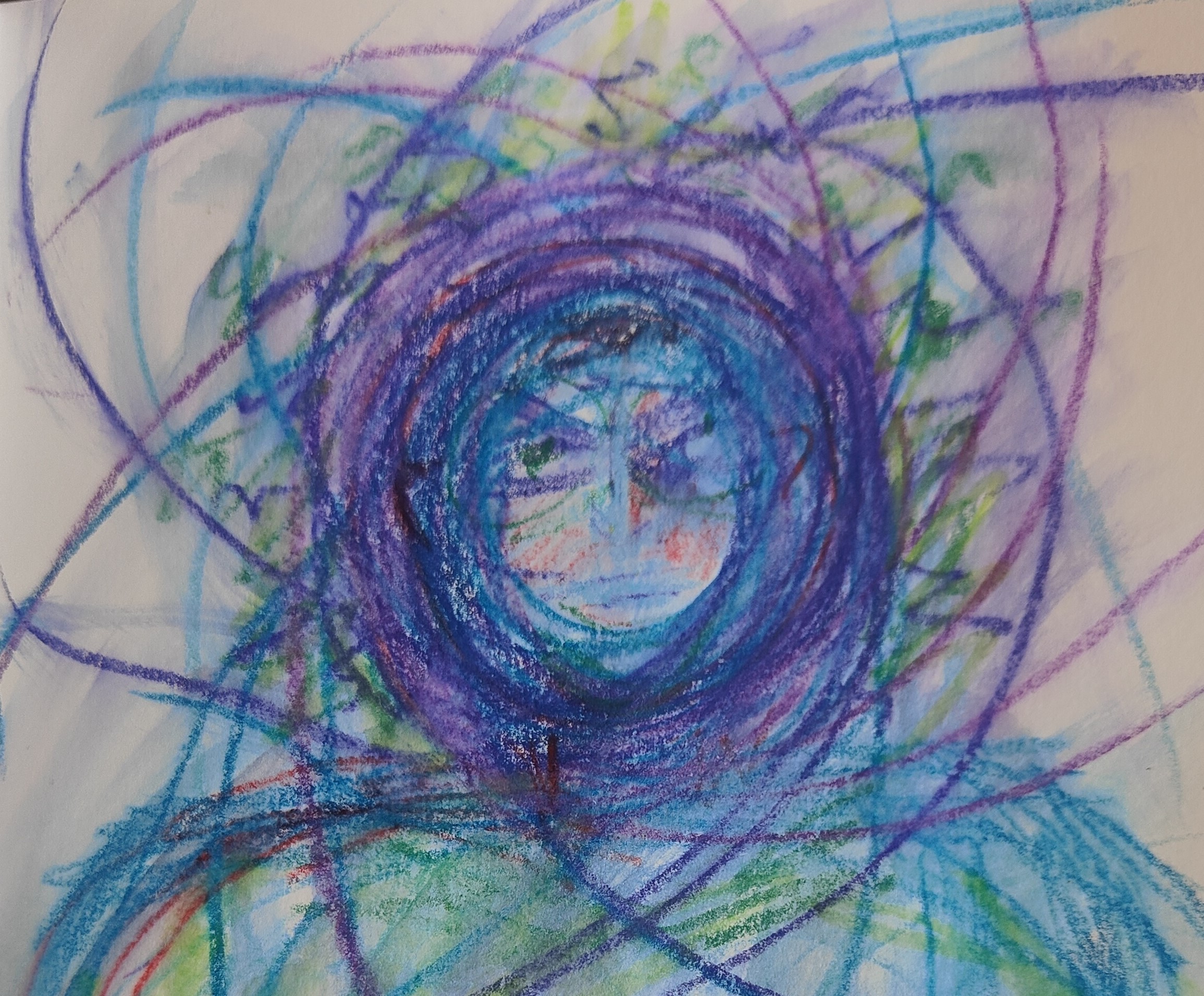
It was snowing, they were late. The cropped, blonde nurse glared at her as her husband fled, keen to escape the clutches of the clinic which radiated an air of military strictness. This was the Pain Clinic. Where everyone is in pain, except – maybe the staff.
She knew better than to explain to the nurse that she was not retarded and could be addressed as an adult. She was now a patient and would have to learn to be patient. The nurses were in charge, that was crystal clear.
The doctor, on the other hand, was an energetic bouncy puppy, full of the joys of Spring. But his name was in fact Summer, and he shone his big warm smile on her pain, making light of it. He praised her ability to stand up straight, to bend, to walk, her reflexes. By the time she left his room she wondered why on earth she was here at all.
Her friend had advised her to say she snored, then you’ll get a single room, she said. But the cropped nurse waved her plea away. You should have written it on the form, it’s too late now, she said. The room was to be shared, but for the now she was alone.
The room was like an oven. Outside the large window was a winter wonderland scene with snow-laden trees and a crisp, blue sky. Inside they were slowly baked by the uncontrollable heating. It had been turned off but was fully powered on. Her nose dried out and caked with blood in no time at all. Her asthma worsened and her skin began to flake. How was she supposed to deal with her pain when she was busy trying not to overheat? She fled outside, gasping for air. The doctor promised to look into the problem but could not promise to solve it.
The first day was one of interrogation and examination, poking and prodding every part of her, including her history. She handed over a thick folder full of medical history and CDs with pictures of her feet, knees, neck, head. Pictures of her pain. Three days later the doctor handed it back with a proud smile. Finished, he said. He asked her about the time she went to the emergency room with dizziness. Not really relevant, she thought, but patiently answered his question. Because she was the patient.
A weekend went by where nothing happened at all, but the bed was paid for. She explored the surrounding area, found a bakery, cafés, shops, bought sushi to replace the bread-heavy evening meal.
Monday the therapy plan kicked in and kicked hard. Pelvic floor training. Weight training. Short foot drill. Nordic walking. Fascia training. Physiotherapy. Trigger point therapy. Cupping.
She skipped the leeches. That was just a tad too middle-aged for her taste. All the rest of the torture she accepted as her lot.
Everyone loved the hydrojet: a water-bed that massaged you with good vibrations, from shoulders to calves, up and down. Heavenly.
Sadly, the old baths next door had been turned into a museum. She had been there with her son on a photo tour and taken artistic pictures of the art nouveau combined with socialist East German interior. Everything in the baths was turquoise blue and tiled. The bathrooms upstairs were delapidated and mouldy, paint flaking from the walls. The sun shone through filthy windows on dust-coated floors. The signs were forbidding and hand-painted. True urbex.
But what she would have given for a swim, for the water to lighten her exercise. In the Pain Clinic the only liquid was a water dispenser with a sign saying “NOT A DRAIN!” that regularly stopped working because the patients disposed their water in the overflow tank or placed their bottles incorrectly on the metal plate. Their stupidity was never-ending, of that the nurses were sure, never reflecting that they could have explained how to use the machine at the outset, and saved themselves a great deal of bother. No, other than the water dispenser and the giant hot-water heater that made weak tea because it was never hot enough, there was no water in the Pain Clinic.
Even the shower was stingy with its dribble. They were instructed in the art of “Kneipp”: alternate hot and cold affusions on legs and arms. But the showers resolutely refused to deliver both the water and the required temperature, remaining mostly just lukewarm and occasionally scalding hot.
The other inmates were resilient and comical. Pain does that, it makes you into a comedian or a stoic. They laughed at every scala: how can you measure your pain from one to ten? What to compare it to? She decided that ten was the pain of giving birth. But then she remembered that she hadn’t even cried out during her contractions that went on for three solid days. And surely there were much worse instances of pain that she had not experienced? A heart attack, end-stage cancer?
Her room-mate used morphine patches every three days. She herself barely bothered taking painkillers unless she was around eight on her personal pain scala. For a morphine patch she would need a scala went up to twenty. So should she even be here? Was she a fake?
Well, she was here now and might as well try and get something out of it. Yet a full week into her stay her muscle tension was just as bad as before and she could only walk as far as the corner café without much pain.
And the heating was turning her into a prune, shrivelled and dry. Everywhere her skin was cracking and splitting. She left the windows open, exacerbating climate change, deepening her ecological footprint and her guilt. She tried going up the chain of command and spoke to the head doctor who said: we know about the problem and we are working on a strategy.
His answer reminded her of all those politicians she had lobbied on disarmament. Yes, it is a problem, we know. Yes, we would like it to change. We are working on a strategy to create the conditions conductive to ultimate disarmament. These things take time.
How should she arrive at a solution? Who could she speak to that would or could not palm her off with another empty promise? The junior doctor had phoned the building maintenance who said they were aware of the problem but a solution was complicated and time-consuming. She spoke to the secretary of the administration who said it was not her problem and to speak to the nursing station in the ward. The dragon nurse knew nothing of a strategy, when she was asked if there was any news on repairs to the heating. Heating? She barked. What’s wrong with the heating? She came to look at the offending radiator, twisted the knob back and forth and declared that it was a problem that couldn’t be solved overnight.
I am not talking about overnight, she said. The previous occupant of the room had warned her of the uncontrollable heating, so it must have been like that for weeks already. Yes, well, the nurse replied. Some patients complain it is too hot, and some that it is too cold. We can’t suit everybody.
She felt her irritation begin to slowly mutate into anger. Is it the patient’s fault, then, that the heating controls no longer work? She demanded to know. Then the nurse delivered the final retort that sent her over the top into full-blown rage. She said: you should think yourselves lucky that the heating is working at all, what with the freezing weather outside, and gestured towards the snow through the window.
I should consider myself LUCKY? She roared back. What has this got to do with luck? But the nurse was gone, more important things to do.
The next day the heating broke down altogether, in all the rooms. She wondered if the nurse had secretely sabotaged it, to prove her point. It was a Sunday, so the weekend doctor obviously didn’t feel responsible. She remarked vacantly that there should be some kind of emergency repair service but did not take it upon herself to ring them. Probably she felt someone else should do it. The patients spent most of the day in bed patiently trying to keep warm.
Later, when discussing mental stress with the psychologist, she realised that she had automatically taken on the job of speaking for the patients and trying to apply pressure ot get the heating problem solved. She was an incorrigible troublemaker, not a patient patient.
But it had worked. On Monday the builders were in the rooms, repairing the heating.
Everyone had complained to her, but not to the staff. She had done that, without being asked. The psychologist congratulated her on a job well done and then advised her now to relax and stop taking responsibility for others. OK, she answered. Next time I feel the urge coming on to become the spokesperson, I’ll come and see you and you can talk me out of it.
The following day it was their turn to have their heating repaired, so they needed to pack up and vacate the room. They were to move next door, nobody knew for how long or when the repairmen would arrive exactly, but they were to be ready. The dragon nurse barked orders at them like they were lucky not to be in a boot camp. Lucky lucky lucky. After all, she was the one who wanted the heating to be fixed.
She wondered if all this stress was hindering her ability to relax. Of course it was. Later, after 12 days of no improvement in the pain, she told the head doctor who she had never seen before: no, it’s still the same, but to be honest, she hadn’t come with great expectations after 20 years or more of pain. He was obviously irritated. Well, why was she here if she didn’t have any expectations?
This time she became more rapidly annoyed. Who was this guy telling her that she needed to have concrete expectations and formulate them clearly? Her shoulders tightened more. What did she hope to achieve? Less pain, she answered through gritted teeth (what else would a patient in a pain clinic want?) Yes, but WHY? He went on, upping the pressure. So I can walk further, she said. How far? He asked her. Then she explained to him carefully, that he was obviously asking her about goals and not expectations. They were not the same. The junior doctor smirked. She told the head doctor that she had filled out the section on goals in the questionnaire. She had clearly formulated the level (numerically) of pain she could live with and how many kilometres she would like to be able to walk. He looked at her with a look of incredulity. I have not read your questionnaire, he said. Clearly, her expectations were ridiculously high if she thought he would have read it. What was she thinking?
Once the heating was fixed and they could return to the room and control the heat in it, the room developed tinnitus. At night there was a high-pitched whistling noise that drove them both mad. It’s the wind, she told her room-mate. Surely not, the room-mate replied. But it was. The choice was between no air or madness; window closed or window open and high-pitched whistling.
The night nurse was sympathetic but declared it normal. All the patients open their windows at night and the through-draft makes the whistling noise all through the ward, she explained. She was used to it by now. But why, she asked the nurse, do they not put draft blockers under the doors? The night nurse shrugged and went back to her station.
She rolled up her physiotherapy blanket und stuffed it against the door. The whistling stopped.
The next day the sadistic physiotherapist that had tried to use brute force to beat her shoulder muscle into submission, without effect, decided that the problem was another: she was grinding her teeth. She needed work on her jaw muscles. She proceeded to execute an excruciating torture that left her face hot and exhausted, and exacerbated her headache. The sadist finished up with a threatening declaration that next time she knew what to expect. There were those expectations again. She prayed that the nice physiotherapist, who the sadist was covering for, would recover quickly and the sadistic one fall sick. As an afterthought the sadist handed her what looked like a bed of nails in the form of mat. Lie down on that before you go to sleep. Not a chance, she thought.
She had only just got back from an illegal escape outing with her husband, and dodged the dragon nurse who screamed after them that visiting times were over, when her room-mate complained of feeling really terrible. She looked it. Her face and hands were bright red and swollen, she had thrown up, she was dizzy, short of breath. In her arm and across her back was an extreme pain.
She ran back out of the room to the dragon nurse and told her there was an emergency. Her room-mate needed a doctor immediately.
It took a while. The emergency doctor wasn’t sure if it was an allergic reaction to the drip she had been given. He put her on another drip. The redness and swelling slowly subsided. But she continued to compain of extreme pain. It seemed like hours went by before the doctor returned. Her room-mate said she needed something for the pain. The doctor replied that she was already on painkillers. They took an ECG and put her on another drip, this time with paracetamol.
The dragon nurse took the time to berate her for using her physiotherapy blanket to stop the whistling through-draft, and took the blanket away.
She decided to speak to the night nurse, now that the dragon nurse had finished her shift. She told her confidentially that her room-mate had received the news the day before that her brother was about to die, within days or maybe even hours. She would never see him again, the final member of her family, for her sisters and parents were long gone. I think it could be a heart attack, she said to the night nurse.
Somewhere around midnight her room-mate was taken to the emergency cardiology unit.
The room-mate was 10 years older than her. Her husband had asked her esoterically: why do you think that they were sharing a room? What was the meaning behind it? And she realised that she too had been asking herself the same question involuntarily. Within just a few days she had got to know this woman intimately. She heard her heavy breathing at night, that she had first mistaken for crying. She had listened to her stories of lost friends and family, of the alcoholic niece who was changed beyond all recognition before her liver gave out and she, too, died. Of the strong and healthy husband who had remained 50 years long by her side. How they had met, where they had travelled – or where they had wanted to travel but couldn’t before the Wall came down. She listened to her absurd and contradictory political views and that she couldn’t vote in the general election taking place while she was in the pain clinic.
They told each other things they had even held back from their own husbands. They shared a love for their sons which surpassed everything and everyone else. They compared pregnancies and births. They covered a multitude of women’s issues, but not feminism, oh no, not that.
She told her room-mate about where she had grown up, where she had lived, coming to Germany, the years before the Wall came down in West Berlin. Her room-mate recalled the building of the Wall, the closing of the borders, families separated. She romanticised the old days, praising the lack of crime, the sense of community that was now lost through reunification and submission to capitalism. She believed what the State had told them about how terrible it was in the West. Of course, she had had nothing to do with the State Police, so she had nothing to complain about regarding the System, but she would have liked to travel more – only where to? It seemed as if the Wall between East and West still stood for her. And the election confirmed that she was not alone. Germany was deeply divided.
They talked and talked and their knowledge and understanding of each other grew. And then, all of a sudden, her room-mate was gone. She could still see her face, full of fear, as they wheeled her out of the room.
She asked the nurse the following morning how her room-mate was. She did not ask if she was alive, which was what she really wanted to know. But the nurse said nothing, she was not allowed to give her any information at all.
She compained to the doctor: how was it possible she could live at such close-quarters for a week and witness the trauma of a heart attack right next to her but not be allowed to know if she was alive or dead? Yes, yes, he said. I can completely understand how you feel. He left her in ignorance. Like the empty phrase: thank you for sharing.
The cropped blonde nurse came to clear out the cupboard and pack up her room-mate’s belongings. She cursed solidly, complaining about the amount of stuff her room-mate had squirreled away. When she came across a rotten tomato in the bedside table, she exclaimed her disgust, holding up the offending object for her to witness. I will throw it away! She told her. You have seen for yourself that it is rotten, not that she will want to have it back!
That was how she knew that her room-mate was indeed still alive. Now all she needed to do was find her, as she had promised her as they were wheeling her away.
And yet, returning to the question as to why she had shared a room with this woman and not another, she thought it was this: it had taken ten years and several botched operations for her room-mate to physically deteriorate this far. To end up being able to move so little that she now weighed maybe 150 kilos and could only walk with a walking-frame. Was she looking at a possible future self if she did nothing to stop her own progressive deterioration? Was her room-mate a warning to her? Don’t let yourself go, keep fighting to walk, keep looking at ways to relax, keep your muscles, your balance, your stability, in short: your health.
She had her release papers and only one more day to go. Alone in her room she wrote it all down. The questionnaire did not have enough space for all the feedback she wanted to give. Had the medical treatment been good, fair or poor? Should she complain about the dragon or the complaining cropped blonde nurse or the sadistic physiotherapist? Should she say the doctor was not qualified except to give positive feedback on her ability to speak for herself? Should she report that the head doctor was more interested in her expectations than her actual pain? How much of the problem was bad management, overwork, under-staffing and lack of funding? Could her empathy stretch so far that she could let it all go?
Finally, on leaving the clinic she was required to document her level of pain on the – by now familiar – scala of 0 to 10. How much pain was she able to stand? No space to write: it depends on what else is going on, if the heating is broken, or the wind is whistling through her head at 90 miles an hour, or her room-mate is dying next to her.
And what was her general state of well-being, using a new scala: from -100 (very bad) to +100 (very good)? No reason given why her well-being was measured 200 times more differentially than her pain. Could she sleep enough or not enough? She slept enough but was driven several times in the night to the toilet, but no space for that on the questionnaire, just enough or not enough. A scala of two. And was the pain continuous, did it affect her activities and needs? On a scala from not at all to almost completely?
And so on. And so forth. Every single question left her with a feeling of inadequacy. She felt mostly bad, but not terrible and was very often quite happy. She slept enough but never well. She was in continuous pain that she was mostly able to stand because she’d learnt how to ignore it. If she couldn’t then she took a little round chemical pill that she was allowed to take. But was it really all that bad? Her room-mate said she was over-sensitive. Her husband said she shouldn’t get so worked up about things. Another patient told her she should anyway take no notice of what other people said.
That doctor had asked her why she had come to the clinic in the first place? She had not said what she really should have: I came because I wanted someone to help me.
She revisited the psychologist to unload the trauma of her room-mate’s near-death experience. Comfort yourself like a child, she said. Stop helping others and help yourself.
The last day arrived. She had hardly slept. She wrote lists of ideas of how she could help herself. She mulled over her two weeks in the clinic and why she felt worse than ever.
She had pushed herself beyond her boundaries, leaving her comfort zone in her desperation to change something. In the opposite direction lay acceptance. Perhaps that was the way to relaxation?
Do nothing, stand there. Shrug her shoulders and say, fuck it, not my problem. Stop looking for the magic answer and just do what she liked?
Well, it was worth a try.
 X-FACTORED
Leave a comment