Part 2 of Uncle Len, Wife-Killer
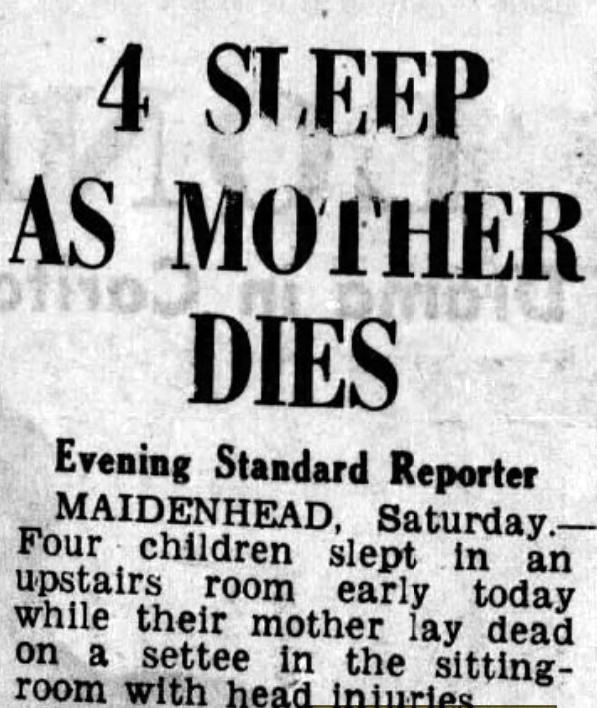
Obviously Len and Lisbeth’s children were taken into care. Not mentioning any names here because quite a few of them are bound to still be alive. But the eight children—ranging from 12 months to 14 years old—are central to this story, since Lisbeth’s death was caused by a row over what should happen to them.
They had nothing to do with the killing itself, five of them were asleep upstairs (or hopefully they slept through it) and the three girls were at their grandmother’s. But all eight must have woken up to a different world.
So what was the row about? Len claims that Lisbeth didn’t really love his children and that is why she wanted him to have the youngest three adopted. That is why he “snapped”, thumped her over the head with a wine bottle and strangled her. He claimed she said she didn’t want to be marooned in Germany with his children. He was of the opinion that she was “used to a higher standard of living” but that the house at Fairacre was “cramped”.
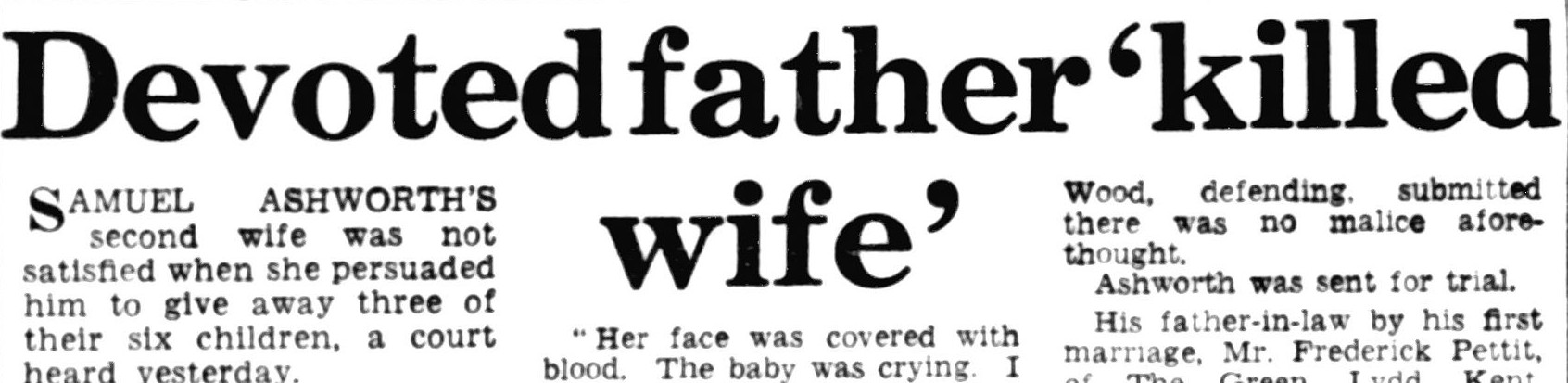
The defence paints a picture of a ‘devoted father’ who is harangued by a spoilt wife who didn’t want to keep up her end of the bargain to look after an upstanding soldier’s children. On receiving her letter that said she was feeling far from well, he said he rushed home to her side on compassionate leave to discuss the children’s future. Len had already “given in” to her demand that three of the kids go to their grandmothers. She tried to force him to choose between her and the children, he said.
“Last night she was talking about my children being adopted and said I wasn’t to be sentimental about it, it was an easy matter. I ask you—an easy matter to get rid of one’s children.”
He claimed that immediately after they were married there were no problems, they had agreed to begin a new life and make the children happy. “But then I realised that Lisbeth did not want my children and did not love them,” Len said. “She was not satisfied when I sent the girls away. She said the boys would have to go away.”
The media of 1960 seemed to see his point, reporting that this “was sufficient to incite the soldier, Samuel Leonard Thomas Ashworth (38) of Fairacre, Bath Rd, to attack her”.
The prosecution, W. J. Wood, made a feeble attempt at seeing Lisbeth’s predicament: When Len was posted to Germany, his wife was left with eight children to look after “and she was obviously finding it a bit of a burden.” A classic English understatement.
Looking after six children under 12 who have only known you for a short time and have lost their mother only months before to cancer. That, on top of your own two children who were probably less than delighted to have to share their living space and their mother with a bunch of kids they didn’t know.
Len’s six children’s mother, Pat, died in London and the kids were brought up in Folkestone and Germany, so they must have been also dealing with another move to an unknown town, new school or nursery, and all the upheaval that brings.
Lisbeth had to deal with all that, alone while Len was in Germany playing Cold War games at a nuclear base. She obviously questioned what she had got herself into by marrying this guy and taking in all his children.
But Lisbeth’s story is another one. We are talking about the children here. The choices that these two grown-ups made will have affected their whole lives. The death of their mothers and the absence of their fathers, one dead, the other first abroad, then in prison, meant they were ostensibly orphans.
After she was killed, the newspaper reported that Lisbeth’s children were staying with friends in another part of the country. Len’s children were put into the care of the County Council. After the trial, the County Council officer, Miss M. Stuart, said she had “arranged for all eight children to stay with relatives or legal guardians in other parts of the country”.
Wherever Len and Lisbeth’s children are now, let us hope they found a way forward and lived the lives they wanted, despite the terrible and fateful mistake their parents made.
Next up in Part 4: D is for Dinah.
Sources:
1 Liverpool Echo, 16 Nov 1960. “Soldier Husband for Trial on Manslaughter Charge. Story of Argument”. Mr Wood said that Ashworth had said that Lisbeth did not love his children.
2 Evening News, London, 16 Nov 1960. “Prosecution tell of quarrel over adoption and allege ‘Wife Said: Your Children or Me’”. “I don’t know what came over me. Something snapped. The next thing I had something in my hand. I knew I had done something horrible. Her face was covered in blood.” (…) Mr Wood said a postmortem showed that the wife had been strangled. (…) A broken bottle was found nearby, and Ashworth might have struck his wife on the head with it.
3 Daily Mirror, 14 Jan 1961. “He killed wife who said ‘give away the children’”. 1.) But an argument arose between Ashworth and Lisbeth about the children’s future. She said: “I do not intend to be marooned with your children in Germany.” (…) Ashworth, in evidence, told the jury: “Lisbeth was used to a high standard of living. She said she was not going to lower her standards and that we couldn’t afford to keep all the children.” 2.) A letter written by Lisbeth to Ashworth while he was in Germany was read in court. In it she said: “I have never worked so hard in my life and I feel far from well.”
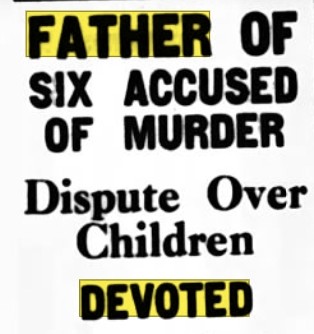
4 Leicester Evening Mail, 16 Jan 1961. “‘Devoted father’ killed third wife”.
Daily Herald, 17 Nov 1960. “Devoted father ‘killed wife’”. Ashworth, a devoted father, had an obsession to keep his family together. He kept house and looked after them himself for six months.
5 Maidenhead Advertiser, 18 Nov 1960. “Murder Charge Reduced to Manslaughter”. 1.) In a statement made to the police on October 16, Ashworth is alleged to have said: “Last night she was talking about my children being adopted and said I wasn’t to be sentimental about it, it was an easy matter. I ask you – an easy matter to get rid of one’s children.” 2.) “But then I realised that Lisbeth did not want my children and did not love them,” Ashworth said in his statement. “She was not satisfied when I sent the girls away. She said the boys would have to go away.” 3.) When he was posted to Germany, said Mr. W. J. Wood, prosecuting, his wife was left with eight children to look after, “and she was obviously finding this somewhat of a burden.”
6 Maidenhead Advertiser, 20 Jan 1961. “Four years prison for killing wife”. 1.) an Army warrant officer’s third wife told him that he would have to choose between her and his six children by a previous marriage. This was sufficient to incite the soldier, Samuel Leonard Thomas Ashworth (38) of Fairacre, Bath Road, to attack her. 2.) The County Children’s Officer (Miss M. Stuart) arranged for all eight children of the two previous marriages of the Ashworths to stay with relatives or legal guardians in other parts of the country.
7 Death of 2nd wife, 1960: England & Wales, Civil Registration Death Index, 1916-2007, General Register Office; United Kingdom; Volume: 5c; Page: 395, Irene P Ashworth death registered Jan-Feb-Mar 1960 in Westminster (age 35).
 X-FACTORED
Leave a comment