Part 5: Family connections, including Uncle Len
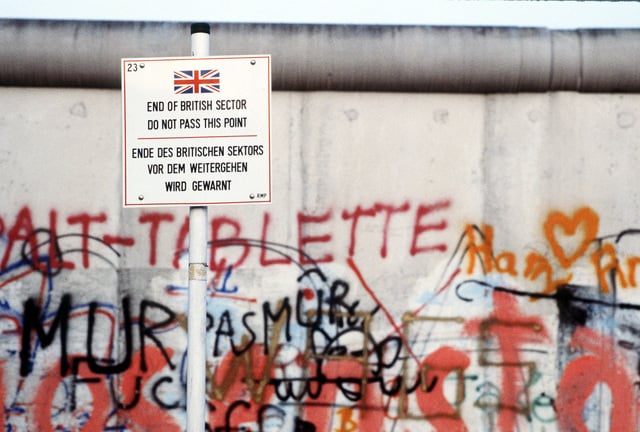
The British Army of the Rhine had also, unknown to many, occupied Germany after the Great War and was disbanded in 1929, only to return as an occupying force again in 1945. The British sector of West Germany, after the division of Germany into four occupied zones at the Yalta and Potsdam conferences in 1945, covered North-Rhine Westphalia (NRW), Lower Saxony, Hamburg, and part of Berlin. British forces were still in Germany when I emigrated to West Berlin in 1985, and they stayed till 1994, three years after reunification.
So, when I first came to Germany in it was still occupied. I lived in the British Sector in West Berlin, in the village of Gatow. Our house was opposite the British Commanders residence on the Havel lake. In those days, I couldn’t speak German and had to work in an Irish Pub to earn my way. We had to be able to count up to ten in German to get the job, so we could say how much the drinks cost, but otherwise the customers wanted us to talk to them in English.
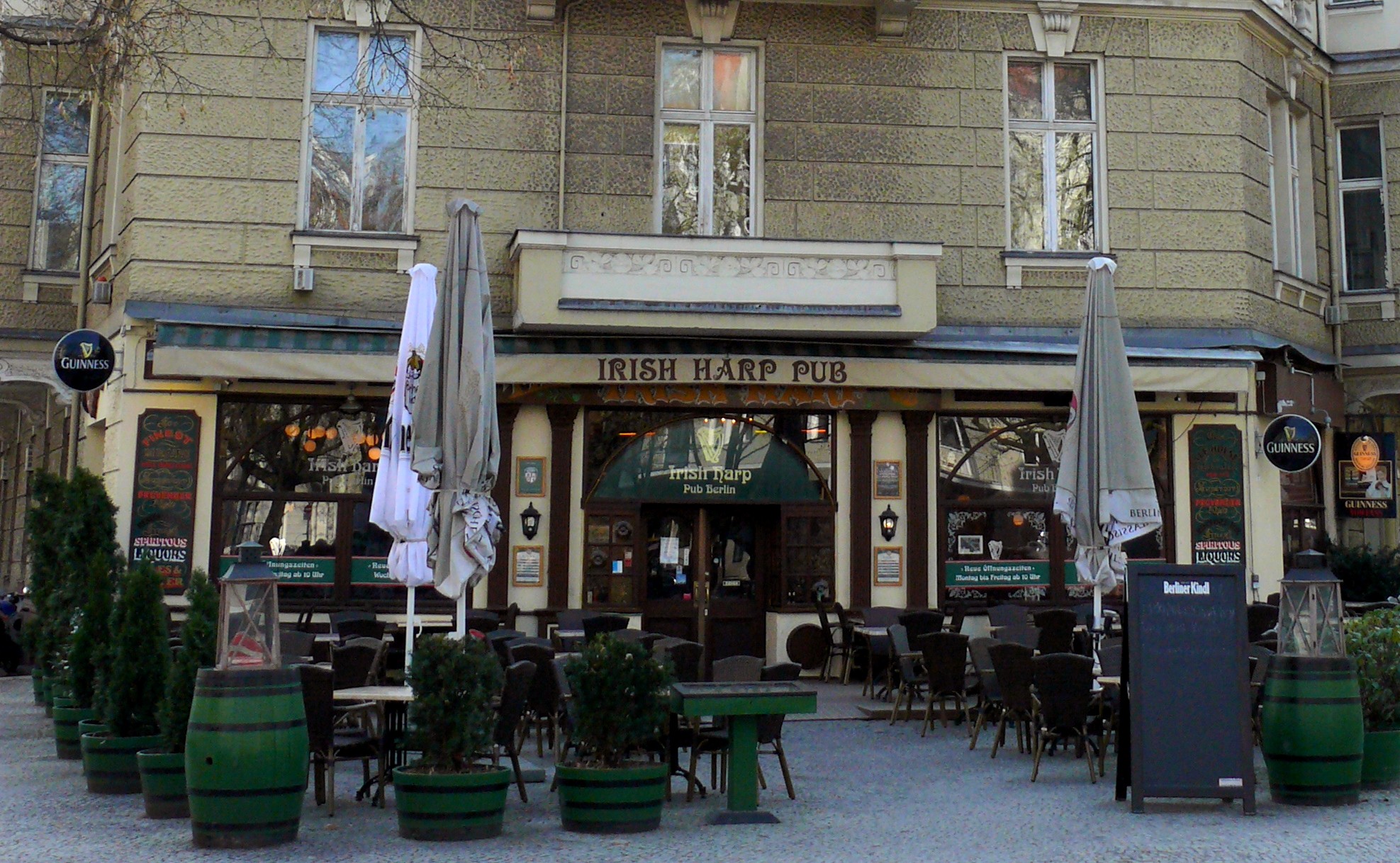
The British, American and French soldiers regularly came to drink in the pub, the Irish Harp in Giesebrechtstraße. You could tell the difference when they walked in the door. The British had usually tanked up on cheap drinks in the NAAFI before they went out on the town, so they were often drunk. We fought over the tables where the American G.I.s were sitting because their tips were the most generous. The French were liable to get romantic and buy you roses, rather than tipping. The roses gathered uselessly in vases on the bar and were thrown away in the morning, already wilted.
One evening, when I was working in the Harp, an old boyfriend walked in with a bunch of British officers. I knew he had joined the Army back in 1978 when I had left to go to university, but we had lost touch. He looked completely different, his long hair cut short and he wore tinted glasses, but I recognised him by his walk. When I spoke to him later on, catching him totally by surprise, he told me he was working for British Intelligence, spying in East Berlin. Who knows if it was true? He claimed to have seen the my file at MI5, from the days when I was an anti-nuclear protestor at Greenham Common and other nuclear bases. What I would have done to see that file. But I had no interest in meeting him again, so I didn’t take the bait and let him go his way. It probably wasn’t true anyway.
Living in Gatow, I often got a glimpse of the army wives on the bus with their kids going back to barracks. At the time I was writing a short story about domestic violence and I couldn’t help but wonder how rife it was in the Army. Since stereotyped gender roles and alcohol abuse are also common in the military, it didn’t seem a far stretch that there would be a problem with domestic violence. Indeed, a study by Dierdre McManus et al shows that domestic violence is indeed highter in families of military personnel compared to the general population1. A quick internet research shows that nowadays the British Army take this problem more seriously, even today. Women become easily isolated and their only friends also from military families. Reporting can have consequences for them, such as losing accommodation, or income, if their partner loses their job. Also the way reports are handled within the military have been criticised2. In the 1980s, or in the case of Uncle Len, the 1960s, the problem was most likely disregarded entirely.
In 1987, I personally experienced gender segregation within the British Army when I accompanied a friend who was playing in a band at the Sergeant’s Mess in Spandau. At the bar I was told I could order drinks through a proxy, but I was not allowed – as a woman, to step over a white line a yard away from the bar. The space between this white line and the bar was completely packed with men. All the women (most likely their wives) were right at the other end of an empty hall, sitting at tables.
My family has had much to do with Germany: My father did his military service in Germany, after the war from 1949 to 1950, with a battalion in Lippstadt, NRW. He was seconded to the War Crimes Unit in Hamburg where he assisted the President of the Court, Lt.-Gen. Sir Frank Simpson, with the prosecution of General von Manstein. Later he became a reporter for the British Forces Network (which in my time was BFBS (British Forces Broadcasting Service), the radio station that competed with RIAS (Radio in the American Sector) for top ratings among the music-hungry Berliners)3.
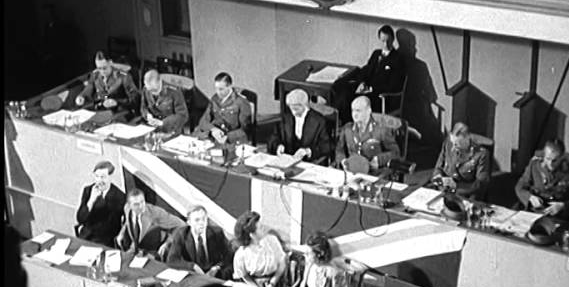
My grandfather, Bernard Blenkiron, was also based in Germany after the war, working with the Control Commission of Germany rebuilding the oil refineries. He was posted to Kiel and then Hamburg. My mother went to King Alfred’s School in Plön near Kiel, a British boarding school, from about 1948 to 1950. My cousin tells me that my grandfather argued with his brother, Duncan about whether German soldiers were all bad or not. Since Duncan was almost three years in captivity as a POW during the Great War, he maybe experienced German soldiers differently than Bernard.
But once again, I digress. Getting back to our Wife-Killer story: Uncle Len served in Germany after the war. I haven’t found his military records despite exhaustive searching but in the newspaper reports on the murder it is clear that he was a Warrant Officer in the Royal Artillery and had been posted to Germany shortly after he had married Lisbeth in July 1960.
At least three of Len and Pat’s children were born in Germany. Their births were registered in Iserlohn4, in the Märkischer Kreis district of North Rhine Westphalia. The most likely military base where Len would have been posted near to here is the Northumberland Barracks at Menden, possibly with the 58th Medium Regiment which was disbanded in 19595.
It is also more than likely that he had been on compassionate leave from the Army while his third wife, Pat, was dying and also after she died in February 19606 when he couldn’t leave the children. But before that, he would have also have been posted in Germany. The evidence given by Lieut.-Col. Geoffrey Kup (mispelt Kupp in the papers) places Len under Kup’s command from 1957 to 1959. According to his wife, Dulcie, she and Kup spent all of the 1950s (apart from two years in Pakistan around 1952) posted in Germany, so that puts Len there too. Kup left Germany in 1960.
Allow me to go off on a Kup tangent here, because he was also interesting. At the end of the second World War he was awarded an OBE for his service. In the National Archives I found that from 1939 to 1946 he was part of a Special Operations Executive, an intelligence officer. The record was closed for 67 years and reopened in 2014, but I would need to go to Kew to see it7. After a bit more digging I discovered that Kup was the Commanding Officer of the “Balkan School of Artillery” on the island of Vis in former Yugoslavia which was set up to instruct Yugoslavian partisans on the use of the US 75 mm Howitzer gun8. There’s another story to be told, but not today.
Kup gave the court a character reference, calling Len a “loyal and hard-working soldier” and a “kind-hearted man, devoted to his family”9. That would be during the time Len was still with his third wife. Another soldier was called as a witness at the trial: Regimental Sergeant-Major Victor Newell. He visited Ashworth in the time after Pat’s death when he was alone, looking after the children, and is quoted in the newspaper as saying: “I don’t think there is a woman in England who looked after those six children as he did”10. I refrain from comment.
So we can assume Len was in Germany in the late 1950s until he had to return home with his dying wife and look after the children. He was in the UK until he answered Lisbeth’s marriage advertisement, and married her11. Then he went back to Germany around June or July 1960.
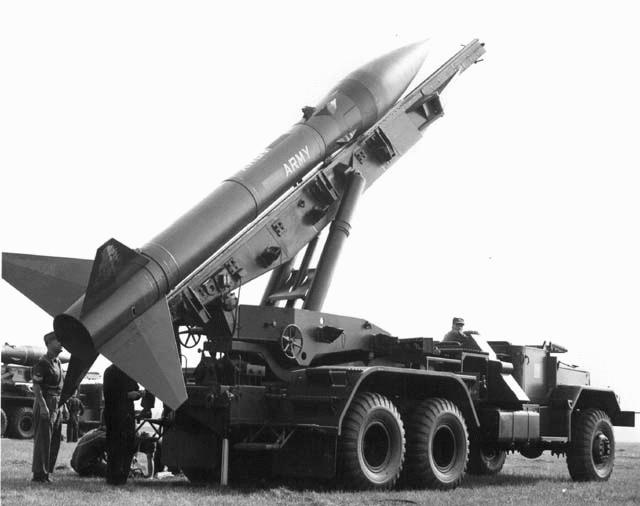
At this time the Royal Artillery in Germany was transitioning to a nuclear role. The 24th Missile Regiment RA and the 50th Missile Regiment RA (also nicknamed ‘50 Miserable’) were converting to use the Honest John nuclear missile. The 24th Missile Regiment was based at Assaye Barracks12 in Nienburg from 1960 to 1962, a provincial town on the river Weser, between Hanover and Bremen in Lower Saxony and historically an important stronghold for infantry, cavalry, dragoons and artillery for the Germans. The 50th Missile Regiment was at Menden from 1959 onwards13. Later, these two regiments amalgamated, when Honest John was phased out.
Honest John was a surface-to-surface missile, developed by the US in 1953. 320 were deployed in Europe, in Germany and Turkey, during the Cold War. They had a range of only 50 kilometres and carried the W-31 warhead with a yield of between 2 and 200 kilotons, depending on the version. It was principally a short-range tactical war-fighting weapon for use against enemy forces on the battlefield. The battlefield being Germany14.
The British Forces (also termed British Army of the Rhine, BAOR) had several nuclear artillery bases between 1960 and 1986 in Germany. The munitions were American and under US control. The nuclear bases were in Hohne, Lippstadt, Menden, and Sennelager. The 50th missile regiment RA at Menden converted to the Lance tactical nuclear missile in 197615.
Quite possibly, Len returned to his old regiment which had become the 50th missile regiment. Whether the 50th had converted to its nuclear role before Len got the letter from Lisbeth asking him to take compassionate leave and come home to discuss what to do about looking after the children, I don’t know. It is likely, however, that he later went back, after completing his four-year sentence (perhaps shorter for good behaviour), with his new wife, Dinah, my Aunt.
What I still don’t know is when they (or maybe just Dinah) returned to England, probably around 1978 when they divorced16. They remarried in Basingstoke in 1981 and ended up in Worsthorne near Burnley in Lancashire, where they lived out their days.
As for me, I have been living in Berlin for 40 years in May, and I married a German man in 2000, who is definitely not at all bad. Like Dinah, I only have one son, and he has dual-nationality: German-British.
Originally published on Substack on 9 Apr 2025, updated and properly sourced on 20 Dec 2025
Coming up: I is for Irene
Sources:
- McManus D et al: Intimate partner violence and abuse experience and perpetration in UK military personnel compared to a general population cohort: A cross-sectional study, The Lancet, Sept 2022, accessed 18 Dec 2025 https://www.thelancet.com/journals/lanepe/article/PIIS2666-7762(22)00142-9/fulltext ↩︎
- Centre for Military Justice: Domestic violence in the armed forces, no date, accessed on 18 Dec 2025, https://centreformilitaryjustice.org.uk/guide/domestic-violence-in-the-armed-forces/ ↩︎
- Hall, Roland: Autobiographical notes for 80th birthday speech, given on 11 July 2010, transcribed by Xanthe Hall (not online). ↩︎
- Sources withheld for privacy reasons. ↩︎
- BAOR Locations: Northumberland Barracks. 58 Medium Regiment RA 1956-1959, arrived from Churchill Barracks, Lippstadt, accessed 18 Dec 2025 https://baor-locations.org/home-3/locations/menden/northumberland-barracks/ ↩︎
- England & Wales, Civil Registration Death Index, 1916-2007, General Register Office; United Kingdom; Volume: 5c; Page: 395, Irene P Ashworth death registered Jan-Feb-Mar 1960 in Westminster (age 35). ↩︎
- National Archives, Kew, Geoffrey Frank KUP – born 20.02.1913, 1839-1946, closed for 67 years, opened 01 Jan 2014, ref: HS 9/868/4 ↩︎
- Maclean F: Eastern Approaches, p. 459, 1949 ↩︎
- Maidenhead Advertiser, 20 Jan 1961: “Four years prison for killing wife”. Ashworth’s former commanding officer, Lieut-Col. Geoffrey Kupp (sic), described him as a loyal and hard-working soldier. From his personal knowledge between 1957 and 1959 he knew Ashworth as a kind-hearted man, devoted to his family. ↩︎
- Maidenhead Advertiser, 20 Jan 1961: “Four years prison for killing wife”. Regt.-Sgt.-Major Victor Newell who often visited Ashworth’s home after the death of the former wife, said: “I don’t think there is a woman in England who looked after those six children as he did.” ↩︎
- England & Wales, Civil Registration Marriage Index, 1916-2005, General Register Office; United Kingdom; Volume: 6a; Page: 83, Lisbeth Stillwell marriage to Samuel L T Ashworth registered Jul-Aug-Sep 1960 in Maidenhead. ↩︎
- Assaye also has an interesting backstory: originally named Mudra Kaserne, it was used as a camp for prisoners of war during the second World War, initially Polish officers. As time went on and the number of POWs increased, the camp was expanded and a Stalag (Stammlager, for enlisted POWs) and an Oflag (Offizierlager, camp for officers only) were built. Famously, in 1941, a group of 13 French officers escaped from the Oflag X-B by building a 50 metre tunnel. Two of them made it home successfully, the rest didn’t. There were POWs in Stalag X-C from France, Poland, Belgium, Romania, and Serbia. From 1943, Italians were housed there too, as well as Soviets. The Red Army soldiers were kept separate from the rest and received the worst treatment.
In February 1945, part of the barracks was unintentionally destroyed by a damaged British bomber that jettisoned its bomb load to have enough fuel left for the home journey. In April the camp was evacuated before the British took it, all those who were left behind were such a bad state that they couldn’t be moved. After liberation, these people were returned to their home countries and the camp was used for war refugees and called “Churchill Camp”. The Stalag was demolished.
Mudra was renamed Assange Barracks and housed the occupying troops, later forces under NATO. In the 1950s, the 24th Missile Regiment (Royal Artillery) moved in. ↩︎ - BAOR Locations: Northumberland Barracks. 50 Missile Regiment RA 1959-1964, arrived from Dundonald Camp Troon Scotland; 50 Missile Regiment RA 1964-1993, accessed 18 Dec 2025, https://baor-locations.org/home-3/locations/menden/northumberland-barracks/ ↩︎
- German language lexicon “Atomwaffen A-Z”, entry for “Honest John”, Feb 2009, accessed 18 Dec 2025 https://www.atomwaffena-z.info/glossar/begriff/honest-john-rakete ↩︎
- ‘British Army Units from 1945 on – 50th Regiment RA’. Accessed 9 January 2026. https://british-army-units1945on.co.uk/royal-artillery/50th-regiment-ra.html. ↩︎
- General Register Office, entry of marriage solemnized the Register Office in the district of Basingstoke in the County of Hampshire on the 23rd December 1981, between Samuel Leonard Thomas ASHWORTH (aged 59) and Dinah Julia ASHWORTH (aged 49), previously married at the Parish Church of St. Stephen with St. John in the City of Westminster on the 23 July 1966. Marriage dissolved on the 2 May 1978. ↩︎
 X-FACTORED
Leave a comment