Part 6 of “Uncle Len, Wife-Killer”
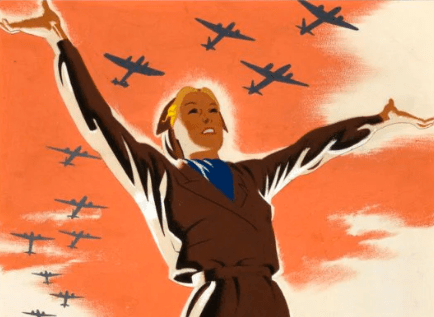
Irene Elsie Munton was born in 1921 in Leicester1 to Arthur Percy Munton and Elsie Abbott. In 1921, Arthur was a participant in an government scheme for disabled men, learning the tailoring trade2. In 1939, he was a boot and shoe repairer3, as his father before him had been4. Irene was also a boot and shoe machinist in 1939, when the war started. In January 1942 she joined the Women’s Land Army and worked in tapping, a machining procedure used in engineering, in Rutland5.
Irene married Samuel Leonard Thomas Ashworth in 1944, when she was 22 and he was 216. He was serving in the army and most likely on leave for the wedding. At Ashworth’s trial in 1961 the court was told that he divorced his first wife, Irene, because she “found someone else” while he was on war service7. He married again two years later8. Irene married Albert J. Haines in 19499. Whether or not he was the “somebody else” that she met while married to Ashworth, we don’t know.
Lots of young people got married quickly during the war, arranged within a short time because the groom often only had a 24 hour leave before returning to fight. Many women had no time or enough coupons to even get a wedding dress, sometimes borrowing a nice dress from a friend to get married in, or even making her dress from her fiancé’s parachute. Neighbours and friends donated clothing coupons to help out. Dresses were often short so the bride could ride her bike to the church. A problem was also feeding the guests, as so much was rationed (two pounds of ham were allowed on ration for a wedding, but that was all). Help was often given by friends offering butter, tea and sugar, and winter stores and allotments were raided. Somehow a wedding cake was made, but with simple frosting.
It was not always easy to get a date as many churches and registry offices were all booked out, so many couples were rushing to get married. Often, the tradition of getting married in the hometown of the bride was ditched because of the groom needing to be at his base, so the military chapel was used. In that case, the whole family of the bride would go with her to the base and bring her back home again. There was unlikely to be a honeymoon.
The need to get married fast stemmed from the desire of many men to stabilise their relationship in an uncertain situation. Noone knew how long the war would last or if they would make it back to their sweetheart. In this way, men tried to make women feel more confident and secure. Women saw the situation as a “now, or never” choice. Also, peer pressure played a role.
Of course, sex played a major role in the decision to get married. Lots of couples wanted to “go all the way” before the man went off to war. And if there were consequences, the woman was safely married.
War meant that newly-weds lived apart. Usually the woman went to work as part of the war effort. Many grew apart in that time, not surprisingly as they often had not known another for very long before getting married. Women became more autonomous because they supported themselves, frequently carrying out jobs that men would usually do. The men changed too, as they went through traumatic experiences, forming bonds with other men who shared their experiences. Very frequently, a couple would reunite to discover that they had become strangers to one another. The original connection was too tenuous and they had little in common. Even when on leave, the husband was not allowed to talk about his job for security reasons, so the wife had no way of understanding what he did. Also, many men resented the fact that their wife had to work and even became jealous of their contact with other men who did not go to war. On top of this, a lot of men did not tell their wives of how they really felt, when they wrote home, for fear of worrying her. The same was true the other way around.
So it is not so surprising, that Len’s first wife fell for someone else, while he was at war. After all, she was very young indeed. Luckily for them, they did not have any children which made remarrying a lot easier.
Updated and properly sourced on 10 Apr 2025
Coming up: K is for Killing
Further reading on wartime marriages:
Lewis A: Just 48 hours to get married. WW2 People’s War, BBC, 16 Feb 2004, accessed on 24 Dec 2025 https://www.bbc.co.uk/history/ww2peopleswar/stories/18/a2301418.shtml
Rhodes G: Wartime marriage: love in a harsh climate, The Guardian, 14 Feb 2015, accessed on 24 Dec 2025 https://www.theguardian.com/lifeandstyle/2015/feb/14/wartime-marriage-love-in-a-harsh-climate
Sources
- England & Wales, Civil Registration Birth Index, 1916-2007, General Register Office; United Kingdom; Reference: Volume 7a, Page 340; Volume Number: 7a; Page number: 340, Irene E Munton birth registered Jul-Aug-Sep 1921 in Leicester, mother’s maiden name Abbott. ↩︎
- 1921 England Census, The National Archives of the UK (TNA); Kew, Surrey, England; 1921 Census Returns; Reference: RG 15/14969, ED 9, Sch 344; Book: 14969; Registration District Number: 407; Schedule: 344, Arthur Percy Munton (22 years 2 months), married bother-in-law, Government Trainer Tailoring, in household of Arthur Percy Munton (22 years 2 months) in Leicester registration district in Leicestershire, England. Born in Leicestershire, England. ↩︎
- 1939 England and Wales Register, The National Archives; Kew, London, England; 1939 Register; Reference: RG 101/6018A; Line Number: 30; Schedule Number: 203; Sub Schedule Number: 1, Arthur P Minton (born 15 Apr 1899), married, Boot & Shoe Repairer & Heel Attend??, at 30, Leicester, Leicestershire, England. ↩︎
- 1901 England Census, Class: RG13; Piece: 2994; Folio: 129; Page: 26; ED, institution, or vessel: 76; Household schedule number: 153, Arthur Munton (34) head of household in Leicester formerly Belgrave in Leicester registration district in Leicestershire, England. Born in Leicestershire, England. ↩︎
- UK, World War II Women’s Land Army Index Cards, 1939-1948, The National Archives in Washington, DC; London, England, UK; MAF 421 Ministry of Food: Women’s Land Army: Index to Service Records of the Second World War; Reference: MAF 421/1/508, Name: Miss Irena Elsie Munton; Employment Start Age: 20; Birth Date: 19 Jun 1921; Employment Start Date: 31 Jan 1942; Employment End Date: 25 Jul 1947; Street Address: 17, Corfield Rise, Braunstone, Leicester; Employment Place: Leicestershire, Rutland, United Kingdom; Occupation: Engineering (Tapping); Description: Ministry of Food: Index to Service Records of the Women’s Land Army During Second World War. ↩︎
- England & Wales, Civil Registration Marriage Index, 1916-2005, General Register Office; United Kingdom; Volume: 7a; Page: 576, Irene E Munton marriage to Samuel L T Ashworth registered Apr-May-Jun 1944 in Leicester. ↩︎
- Daily Mirror: “He killed wife who said ‘give away the children’”. The court was told that Ashworth divorced his first wife because she “found someone else” while he was on war service. 14 Jan 1961 ↩︎
- England & Wales, Civil Registration Marriage Index, 1916-2005, General Register Office; United Kingdom; Volume: 5b; Page: 1050, Samuel L T Ashworth marriage to Irene P Ashworth Or Pettitt registered Jan-Feb-Mar 1949 in Folkestone. ↩︎
- England & Wales, Civil Registration Marriage Index, 1916-2005, General Register Office; United Kingdom; Volume: 3a; Page: 2081, Irene E Munton marriage to Haines registered Jul-Aug-Sep 1949 in Leicester. ↩︎
 X-FACTORED
Leave a comment