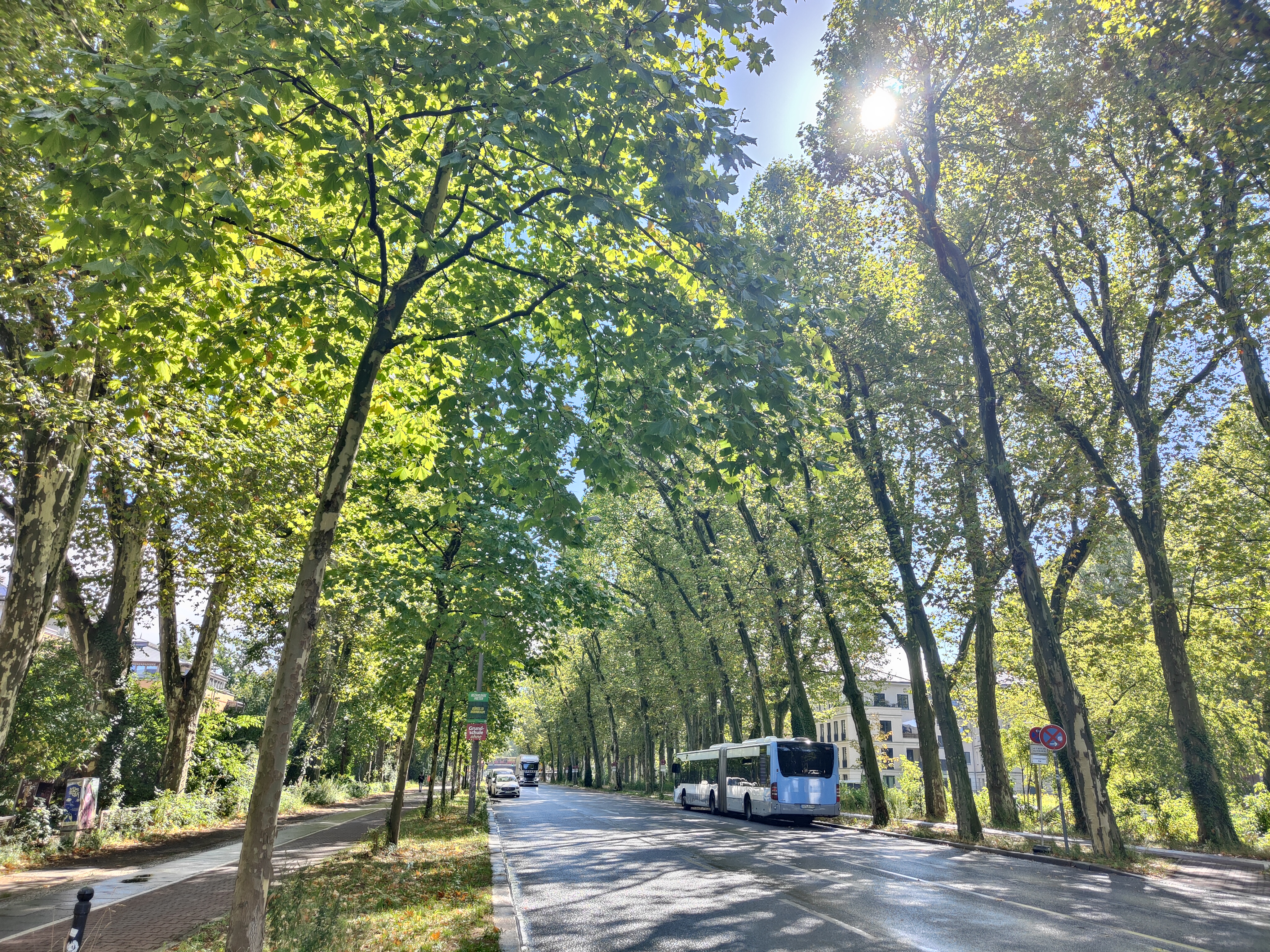
Our garden belongs to a beautiful old villa, built in 1886, that stands on one of the loveliest streets in Berlin: Puschkinallee. So the front garden looks on to an avenue of plane trees that are about 140 years old, making it shady in summer but sunny in winter.
I could write a whole blog here about the house, but I already am covering it’s history in my One-Place-Study. A video talk on the house will be shown on day 7 of the online conference “All About That Place” on 13 Oct 2026.
So let’s get back to our walk.
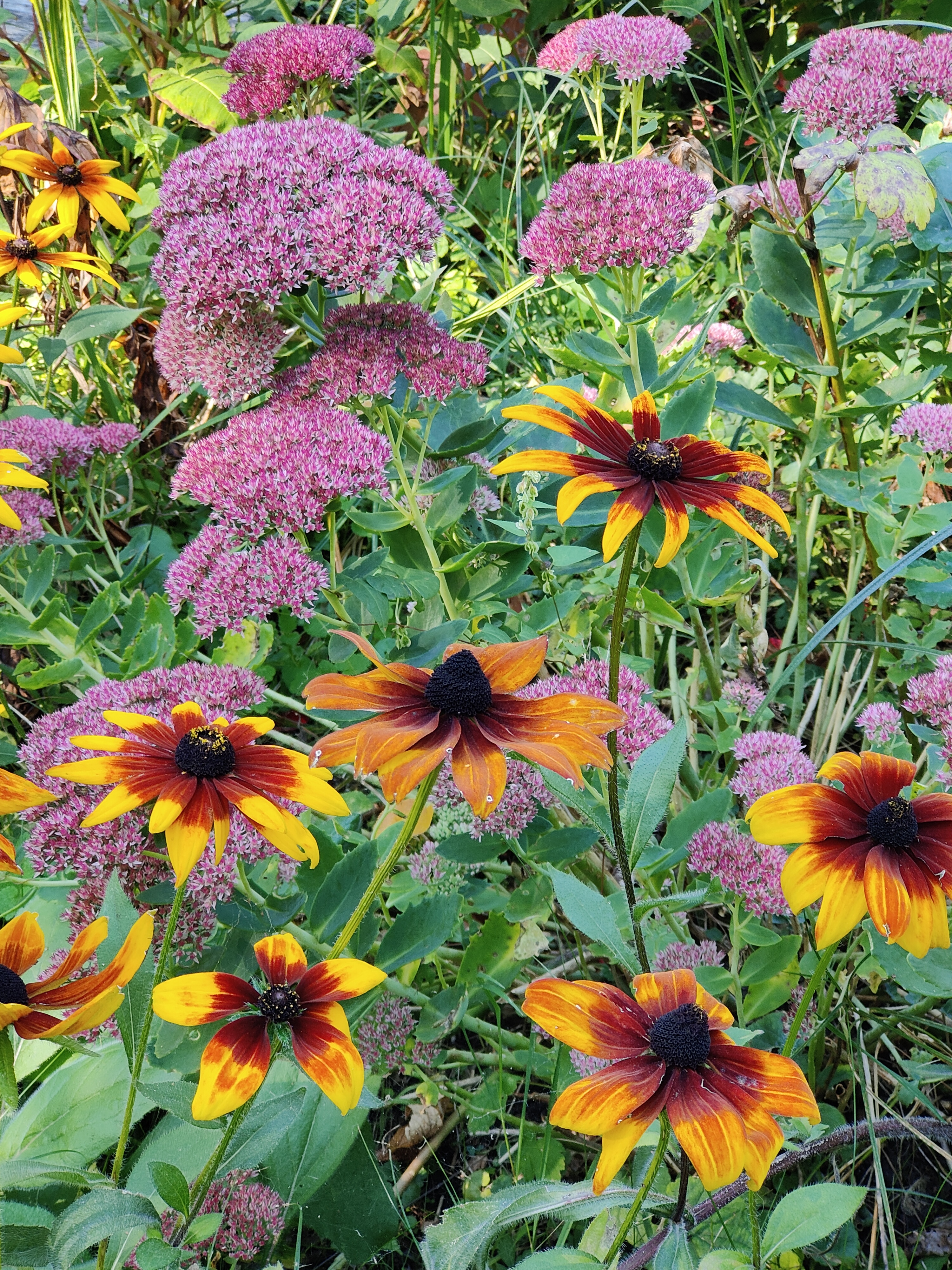
There are coneflowers everywhere in our garden. They were here before us and they move around, reseeding so that every year they are still to be found, but just a little further away. So little you wouldn’t notice until ten years have passed and you realise they aren’t in the flower bed anymore but have moved onto the lawn. If you can call it a lawn, as it has more meadow-like qualities, full of dandelions, daisies, creeping cinquefoil, and yarrow to mention just a few. More about that in Spring.
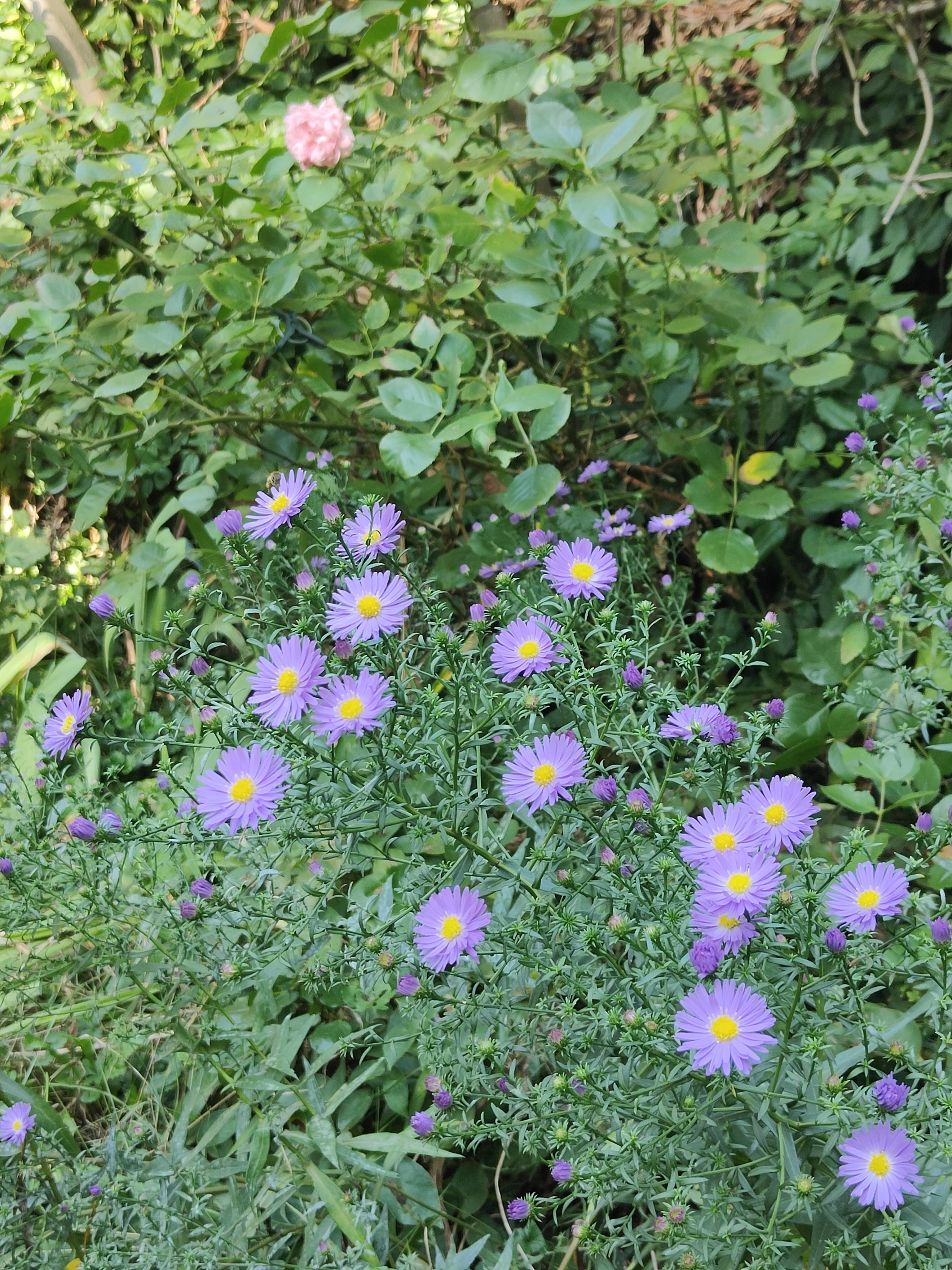
The other plant we have more than enough of is aster. This lilac coloured aster is very dependable to the point of being invasive, and I’ve tried growing pink and white aster to add some variation, but they never seem to survive. But they add a lovely splash of colour to the Autumn garden, so easy to maintain.
We’re right at the back of the garden here where the other gardeners that live in our house are busy. A garden this size needs at between four and six unpaid gardeners and two general clean-up residents’ actions a year to manage it.
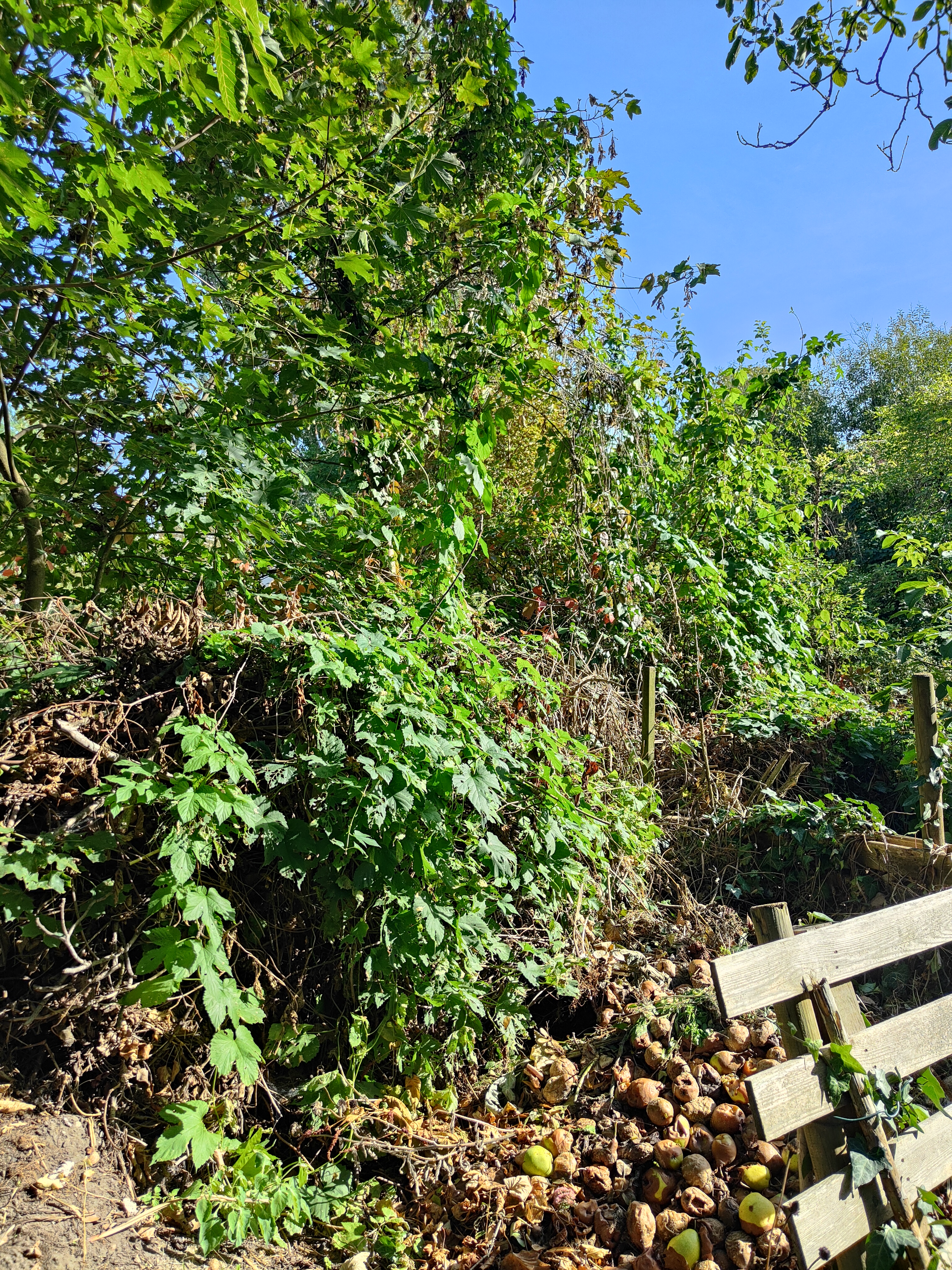
Behind the aster and a nice pink rose is the Benjeshecke, called a dead hedge in English. Since it gives shelter to many little animals and insects, it is anything but dead. It is made up of branches cut from the trees and hedges, laid down horizontally on top of each other and held in place by vertical posts. Ours is over 20 years old and we add to it every year. It is overgrown by wild hops and vines.
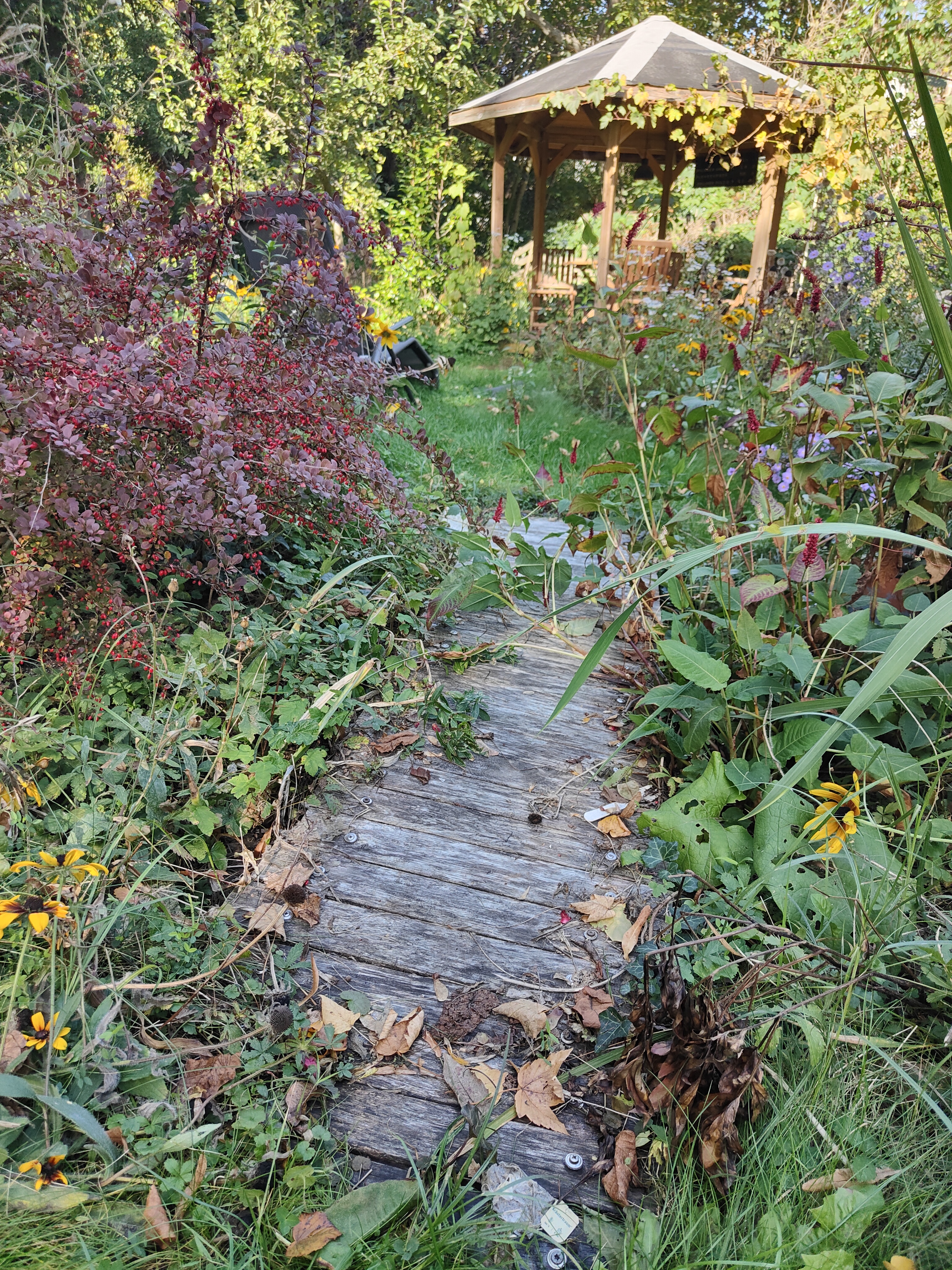
My husband loves to add features to the garden, both practical and eccentric. Over the years there have been many. Some eventually fall apart, especially after a hard winter, but some are built to last. The tea house at the end of the garden has just had the roof re-covered and is used almost exclusively by the Saturday volleyball team. The neighbouring community have a beach volleyball court. Originally, one of the residents had the idea it would be nice to be able to sit and drink tea in the garden, even when it rains. But she has since moved away. I have, though, sat in the tea house in the middle of a raging thunderstorm. It’s quite thrilling to watch the garden lit up by flashes of lightning and be thoroughly drenched by sheets of heavy rain.
The back of the garden is laid out in ‘rooms’ separated by flower beds. Here one room has a shortcut to another over a little wooden bridge. You have to fantasise the water running below it.
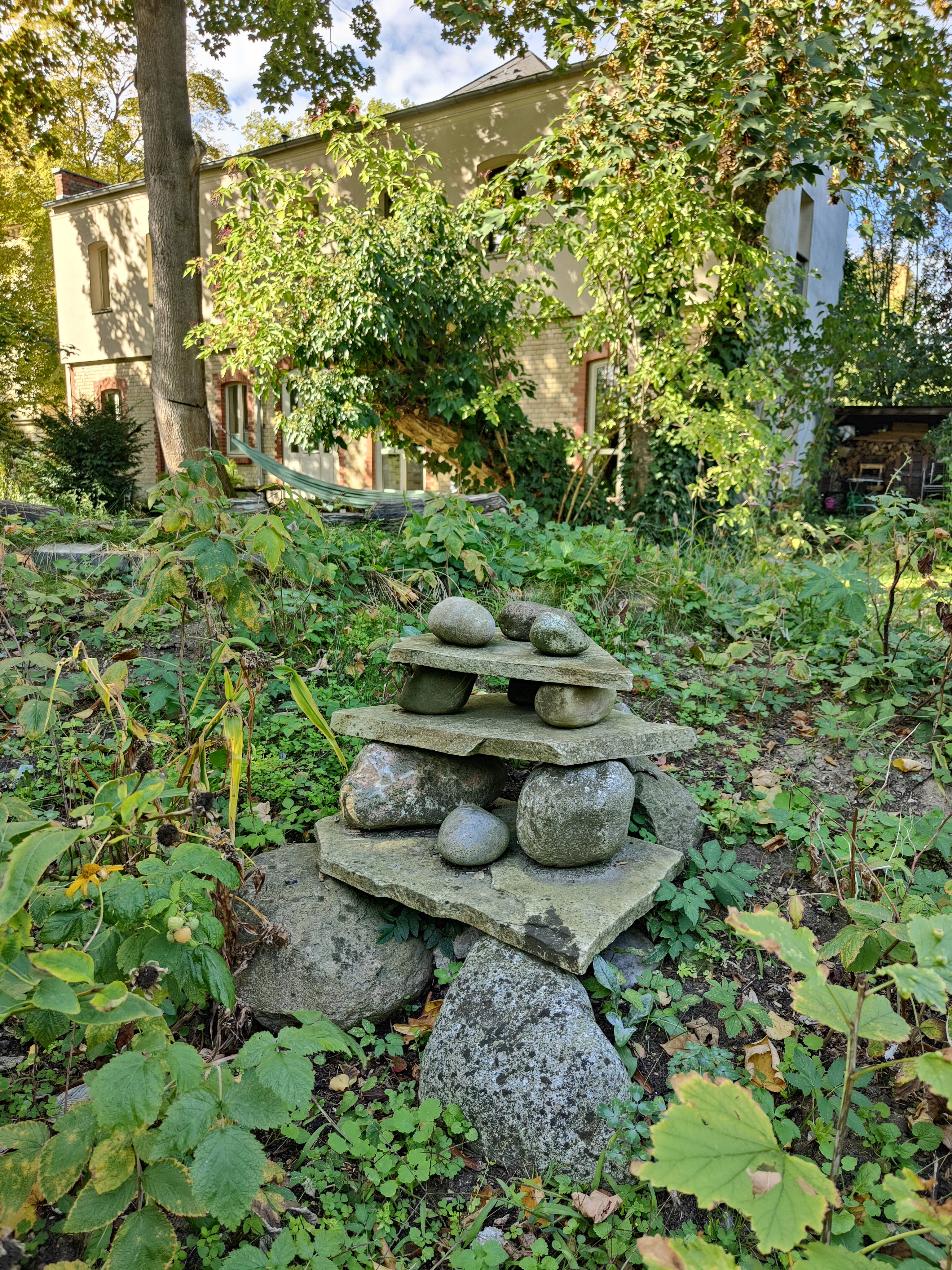
Because my husband likes water features, he built this stone fountain for our dacha many years ago. We moved it here when we gave the dacha up. You have to attach a hosepipe to it to make it behave like a fountain, but the splashing sound of water running over stones is miraculously calming.
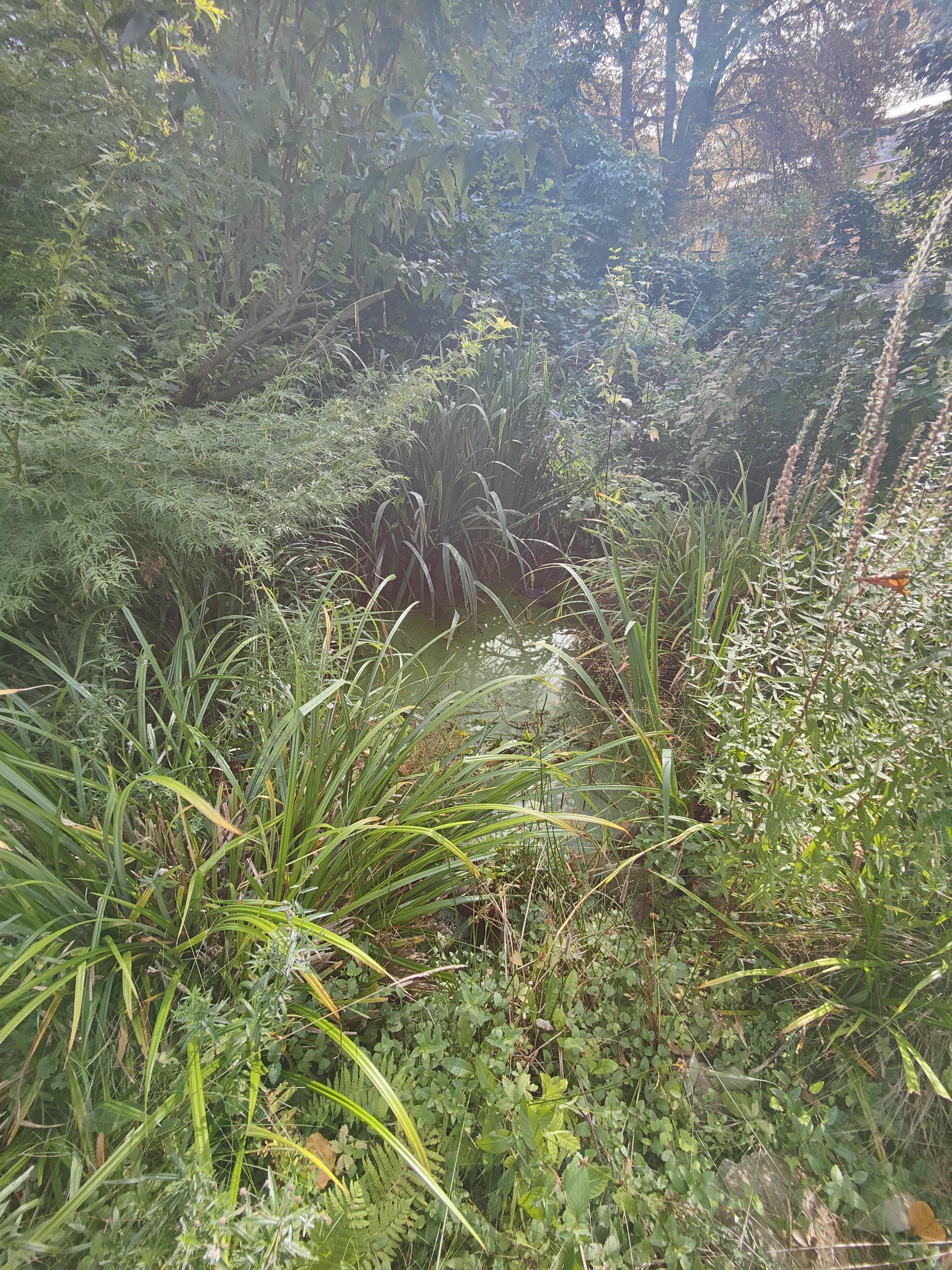
While we’re on the subject of water here, I’ll just briefly mention the pond. It really needs an article all to itself, as the building of it and what we found ‘mudlarking’ in the ground is quite a story.
We used to have fish that ate the mosquito larvae, but the dragonfly larvae ate the fish. Still, it seems that the dragonfly nymphs also feast on mosquito larvae, so we still don’t suffer from too many bites. It’s all a question of the food chain in this biotope.
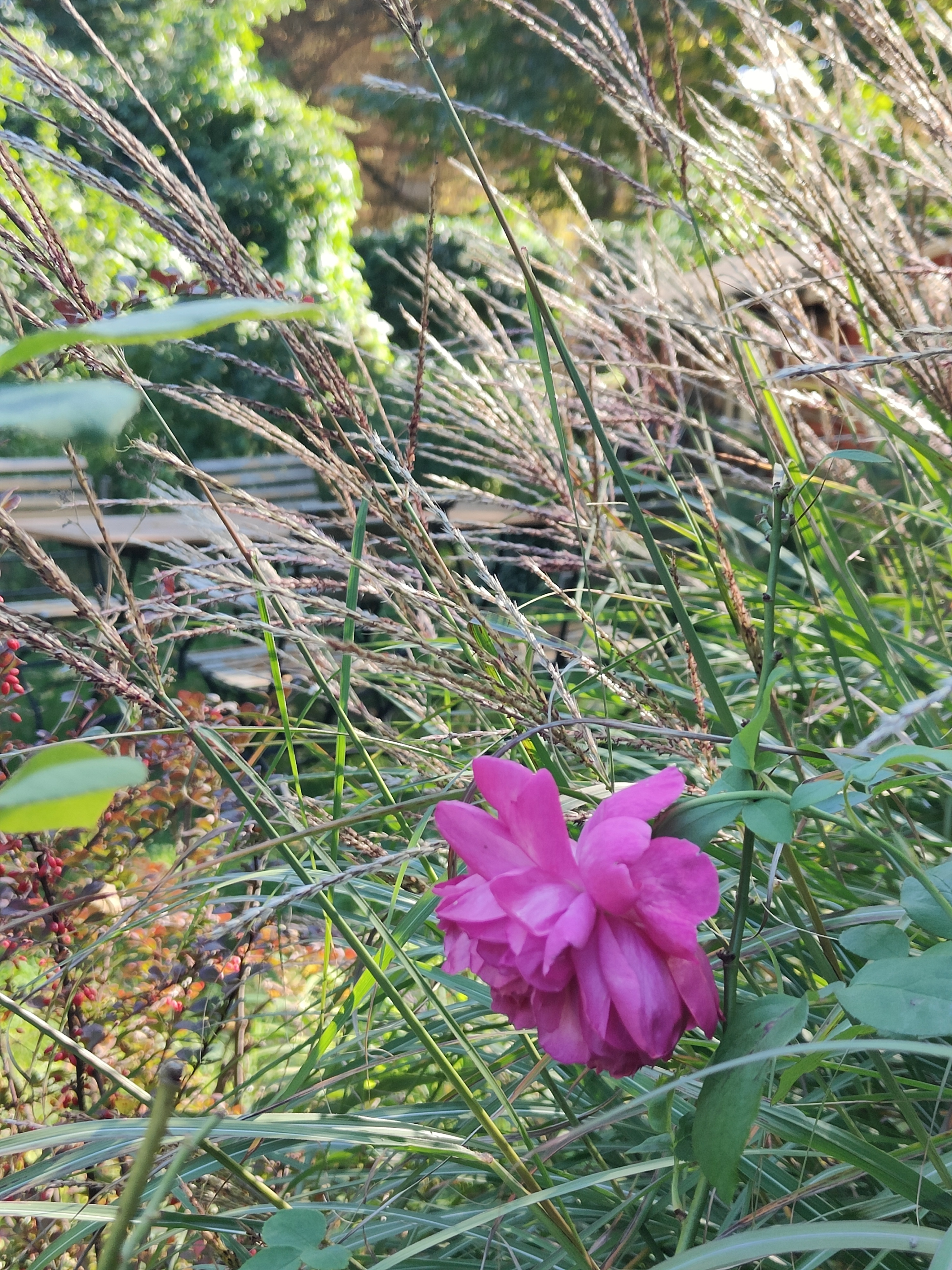
Back to the plants: this dark pink rose is blooming a second time this year, as are all of the roses that were cut back a little after they flowered the first time (dead-heading). Behind it is the graceful Chinese silver grass, not native but a lovely ornamental addition to the garden none the less. Not every single plant has to be for the bees and butterflies, some are just for the human eye.
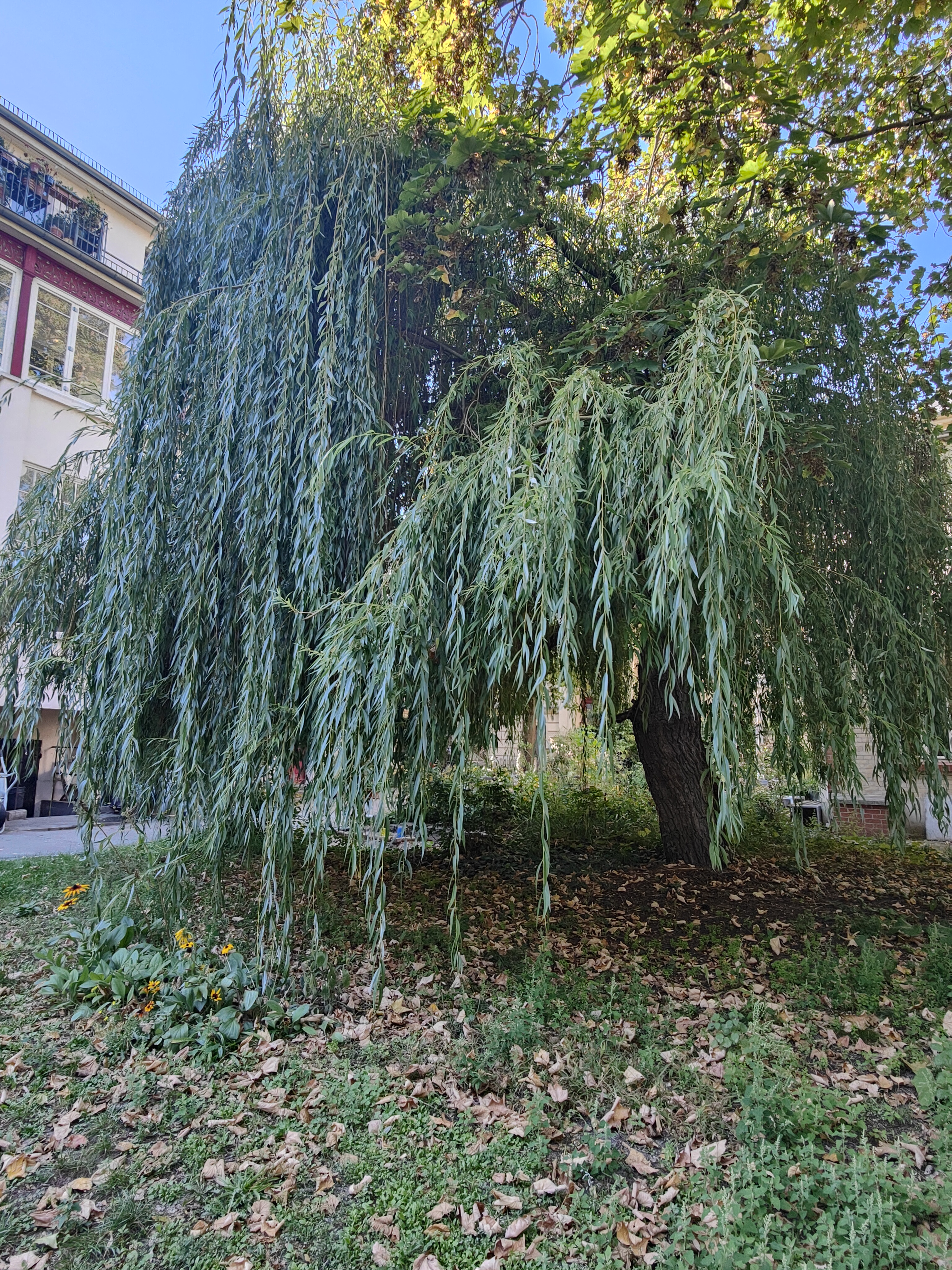
Lastly, standing beforethe willow is the saddest moment in this walk around the back garden. Its days are numbered and it will likely be felled before we return from Greece. It stood here already when we bought the house 22 years ago. Not long after a storm brought down half of the tree. We thought we had lost it then. But willows are extremely resilient trees and it grew back again, now reaching about three-quarters of the size of the house.
Sadly it is now completely hollow and a danger to the children who play in the sandpit in its shade. All of our children played under this willow tree. It was nested in by woodpeckers. It is like an old friend who is dying, but still beautiful, perhaps more than ever.
Look out for part 3 tomorrow: A Walk in the Front Garden


Leave a comment